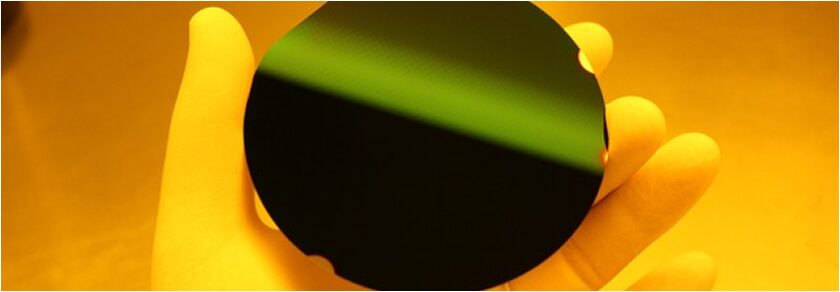
Observing the most extreme phenomena in the universe requires instruments of exceptional precision. This is the goal of the Virgo interferometer, an instrument designed to detect gravitational waves.
In this type of setup, every detail matters. Even the slightest disturbance can compromise the quality of the measurements and limit the ability to detect these extremely weak signals. Among the many technical challenges to be overcome, controlling light plays a central role.

A scientific instrument of extreme sensitivity
Virgo operates by using an infrared laser that circulates through a very large interferometer. This device detects minute variations by analyzing the interference between light beams.
At this level of sensitivity, any stray reflection becomes a potential source of error. The management of optical phenomena is therefore not limited to the main components of the system, but also involves all surfaces present in the measurement environment.

A key challenge: minimizing distracting thoughts
In such a demanding system, the presence of stray light can interfere with the signal and compromise the accuracy of the results. It is therefore essential to control the optical behavior of the surfaces exposed to the laser beam.
It was in this context that IFAE turned to HEF Photonics to develop an infrared-absorbing coating specifically tailored to these requirements.
The goal is clear: to absorb unwanted light in order to minimize reflections and ensure a controlled optical environment.
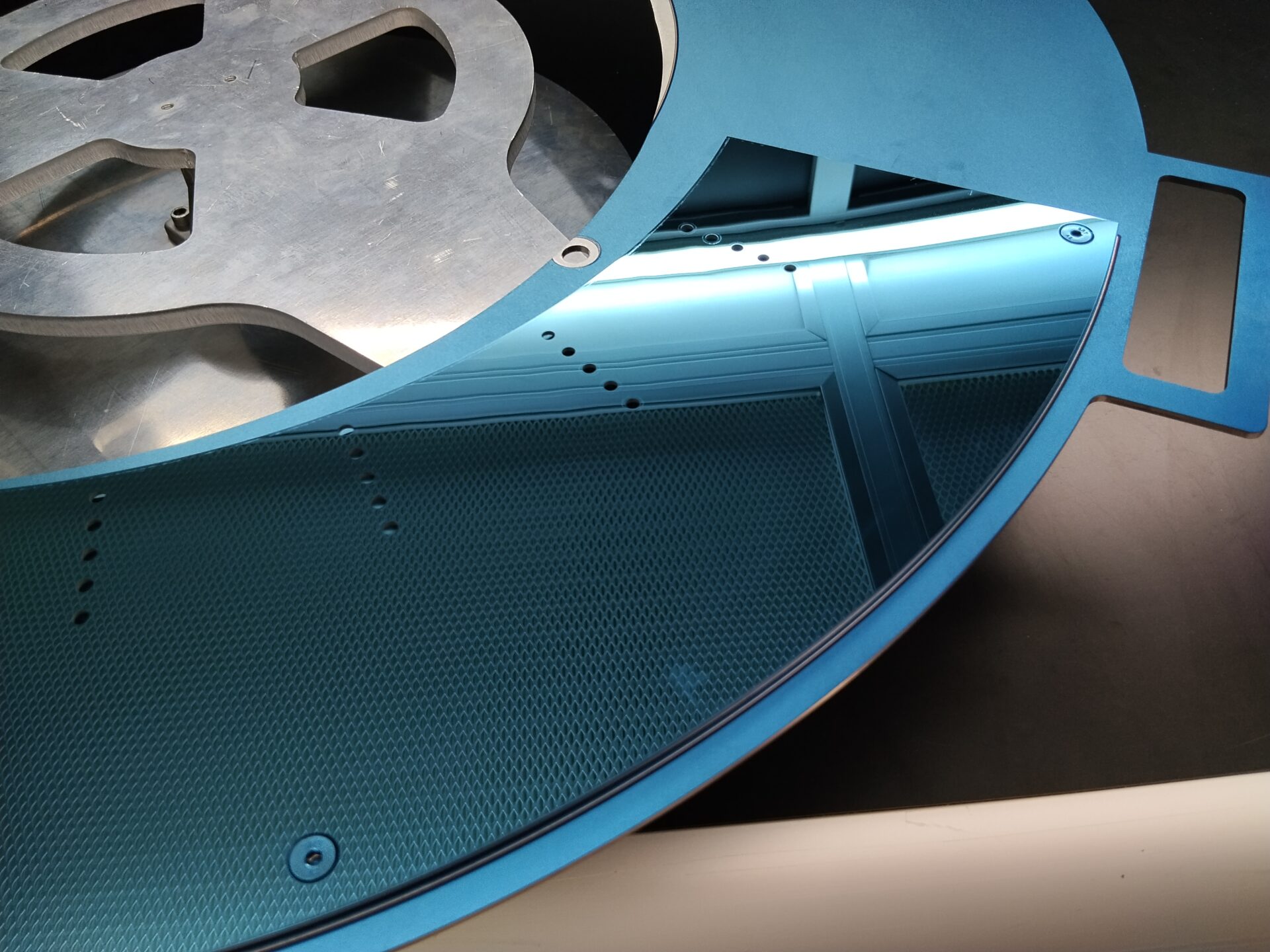
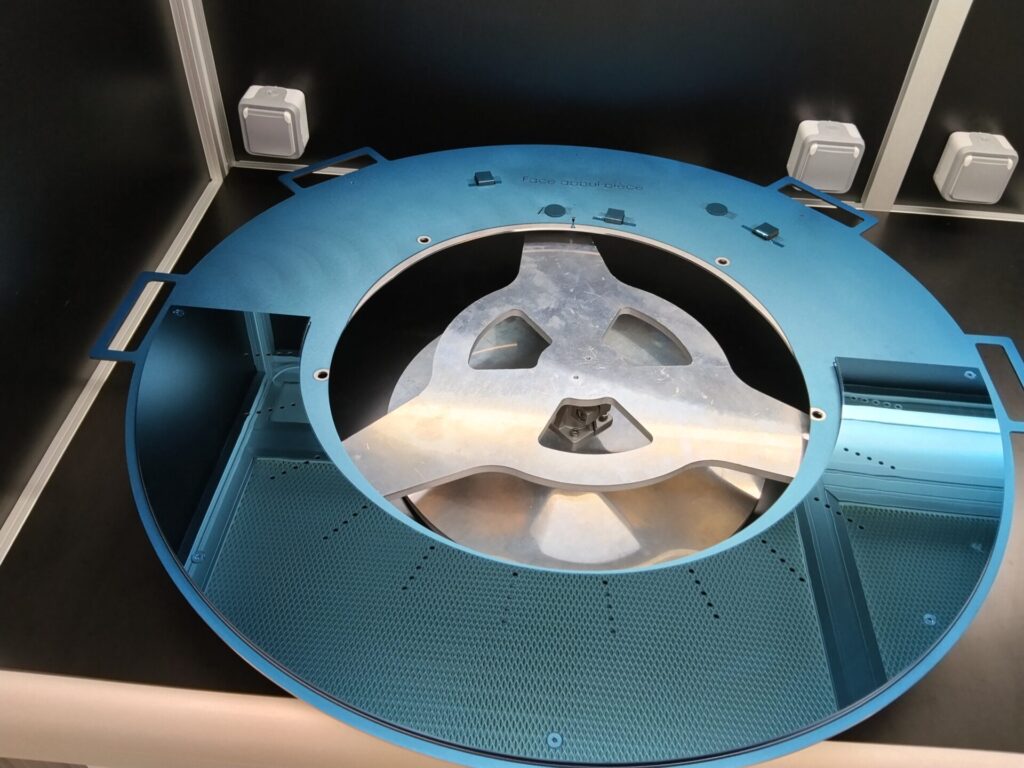
Part after processing
A project involving large components
One of the major challenges of this project lies in the size of the parts to be processed. The components in question are quite large, with diameters of up to nearly 1 meter.
Applying an absorbent coating to such surfaces requires ensuring that:
- consistency in optical properties
- consistent performance over time
- compatibility with a high-precision scientific environment
Controlling these parameters is essential to ensuring the coating’s effectiveness under demanding operating conditions.
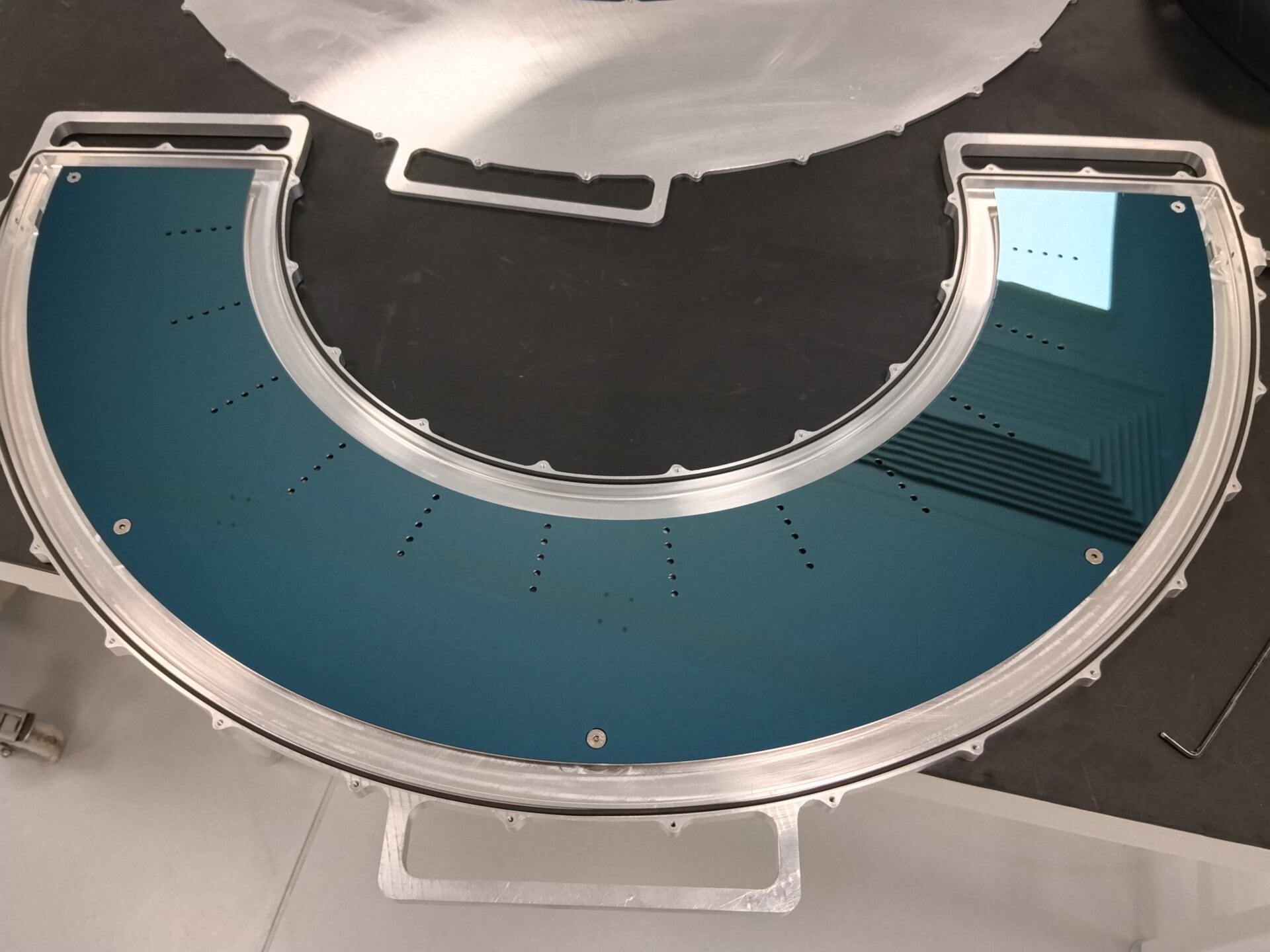
Part after processing
Surface engineering at the heart of scientific performance
This project illustrates the critical role of surface engineering in advanced scientific applications. Beyond instrument design, overall performance also depends on the ability to control the interactions between light and materials.
By developing solutions tailored to specific optical constraints, HEF Photonics directly contributes to improving the performance of devices used in basic research.
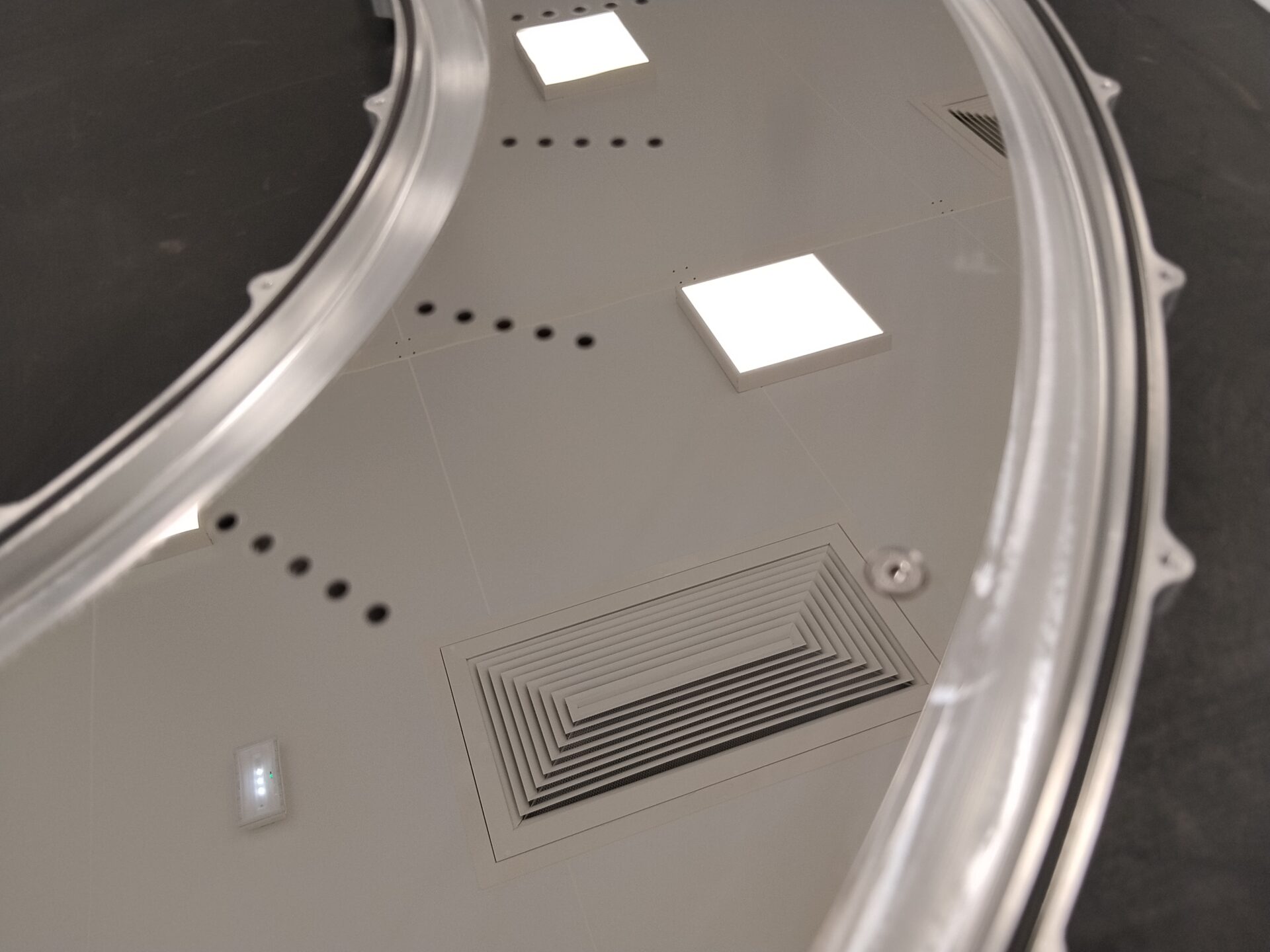
Part before treatment
In fields where every detail counts, mastering phenomena at the micrometer scale is becoming a key factor. This project, carried out in collaboration with IFAE, is a concrete example of this, a quiet yet decisive contribution to our ability to observe the invisible.