In increasingly demanding industrial sectors, a component’s performance often depends on the condition of its surface. To meet the need for extreme precision, productivity, and environmental sustainability, the HEF Group is rolling out its LISTEK® line of technological solutions.
Increased Industrial Demands: The Challenge of Precision and Durability
Whether it’s optimizing the sealing of energy components, improving the light absorption of an optical sensor, or machining microchannels in medical devices, traditional mechanical machining and chemical etching processes are reaching their limits. Tool wear, burrs, heat-affected zones, and the use of polluting chemicals pose major challenges for manufacturers.
To overcome these technological barriers, surface engineering is now shifting toward non-contact and highly localized treatments.

LISTEK®: The Precision of Ultrashort Lasers for Surface Treatment
The result of 10 years of research and development, HEF LISTEK® (Laser Induced Surface Technologies) technology harnesses the power of ultrafast lasers to machine, structure, and functionalize materials at the micrometer scale without altering the substrate. This non-contact process ensures high-precision processing and strict repeatability, whether on flat 2D geometries or complex 3D shapes.
LISTEK BEAM: High-Precision Micro-Machining
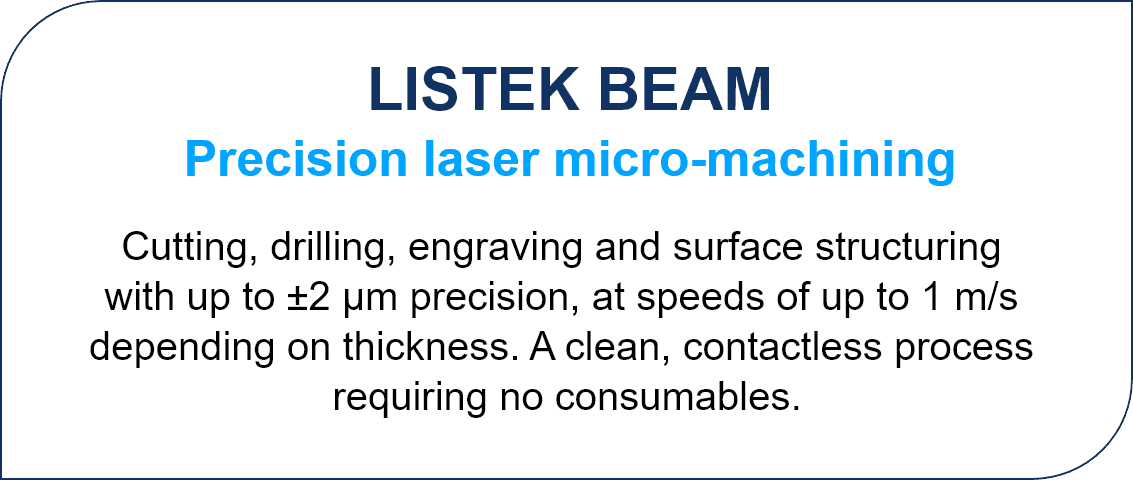
LISTEK BEAM encompasses laser operations aimed at removing, cutting, drilling or structuring material with extremely fine dimensional tolerance:
- Precision cutting and drilling : creation of complex patterns with an XY positioning accuracy of ± 2 µm and a pitch of up to 100 nm .
- Machining of glass and hard materials : high-precision cutting of chemically tempered glass, quartz or sapphire up to 8 mm thick.
- Multiple substrates : handling of metals, ceramics, plastics, textiles and organic materials.
LISTEK FSE: Functional Surface Engineering
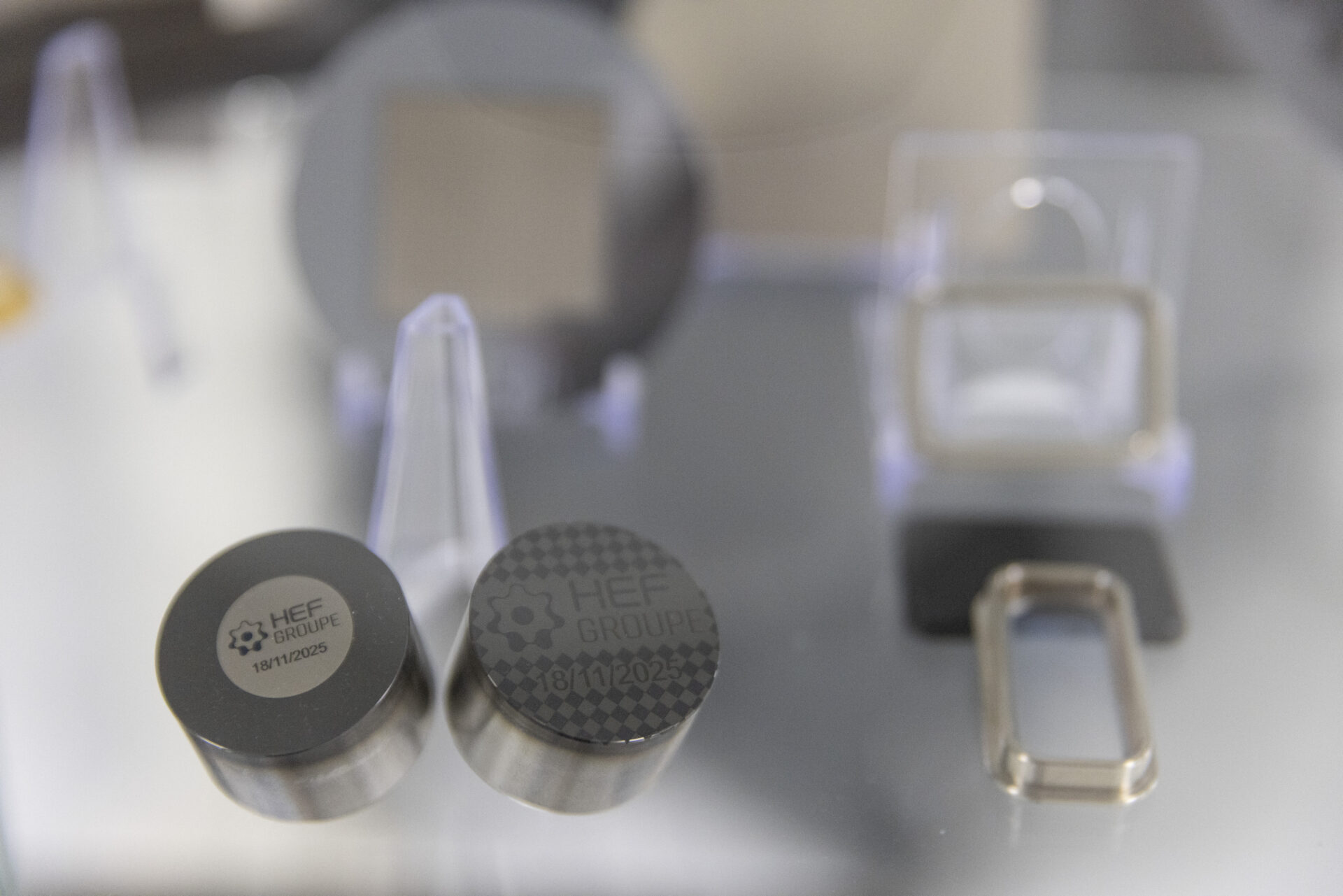
LISTEK FSE (Functional Surface Engineering) transforms surfaces into active components by modifying their physical and chemical properties without adding any material or coating :
- Custom optical properties: creation of light-trapping surfaces with an absorption capacity of up to 97%.
- Wettability control: controlled transition from hydrophobic to hydrophilic behavior.
- Applied biomimicry: replication of natural structures such as shark skin for hydrodynamics, the lotus leaf for its self-cleaning effect, or the gecko’s adhesive structures.
Applications at the Heart of Demanding Industrial Markets
LISTEK® solutions directly meet the specifications of the most cutting-edge industries:
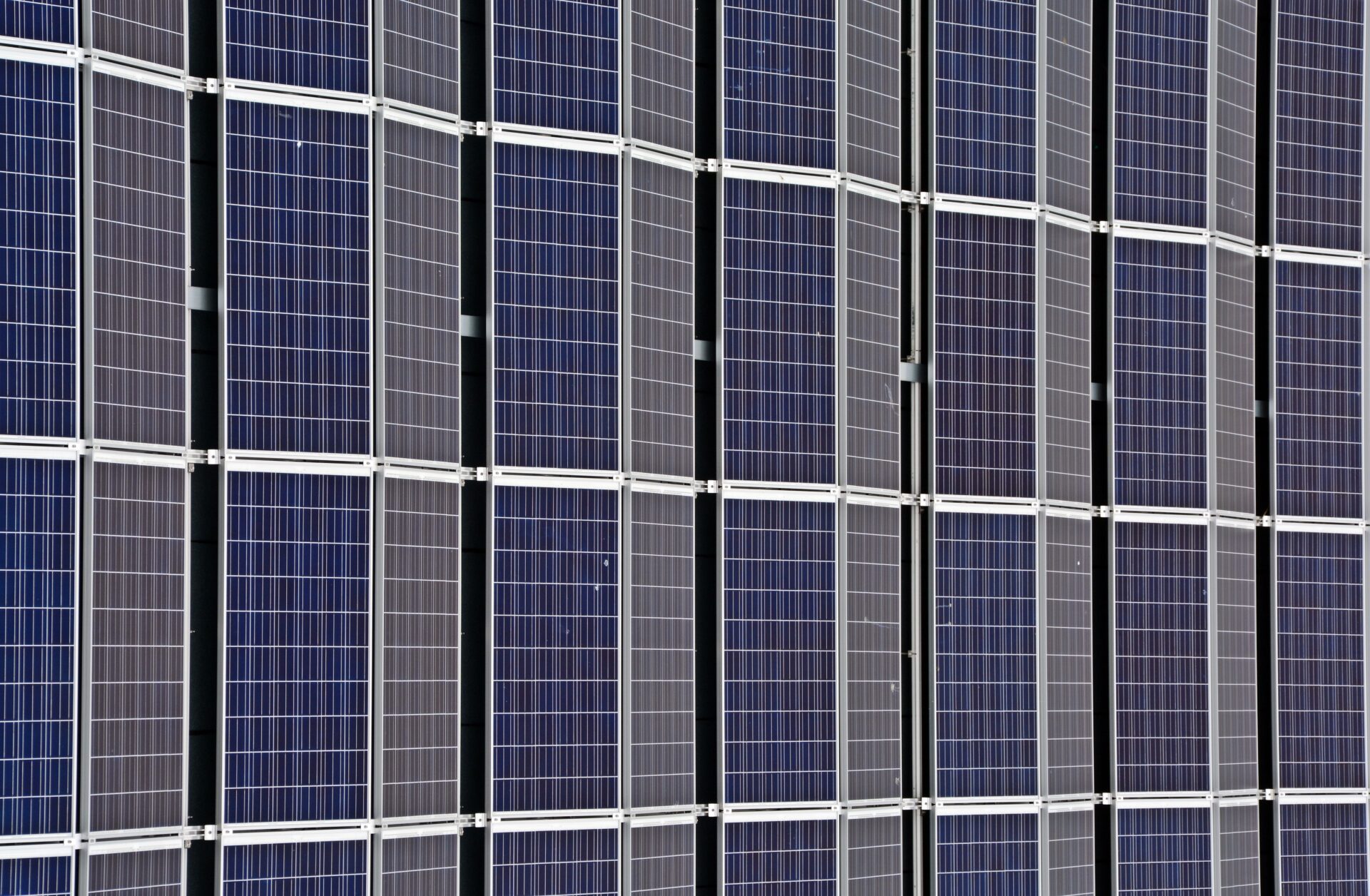
- Energy & Hydrogen: structuring and sealing of bipolar plates for fuel cells.
- Medical Devices: microdiffusers and blood analysis chips with microfluidic channels.
- Electronics & Semiconductors: electromagnetic shielding of enclosures, wafer die carriers, and electronic assemblies.
- Consumer Goods: engraving of plastic injection molds, pad printing patterns, and high-performance friction parts.
Tangible and measurable customer benefits
The integration of LISTEK® technology provides decisive operational advantages for R&D and production teams:
- Controlled precision: controlled thermal impact, absolutely no burrs, and zero degradation of the substrate material.
- Enhanced productivity: surface treatment speeds of up to 1 m/s and a reduction or elimination of pre- and post-treatment steps. The process also integrates with HEF CERTESS® surface treatments for a unified production line.
- Clean and eco-friendly process: no chemicals or additives, zero tool wear, and a low overall carbon footprint.
From Science to Industrialization: Tailored Support from the HEF Group
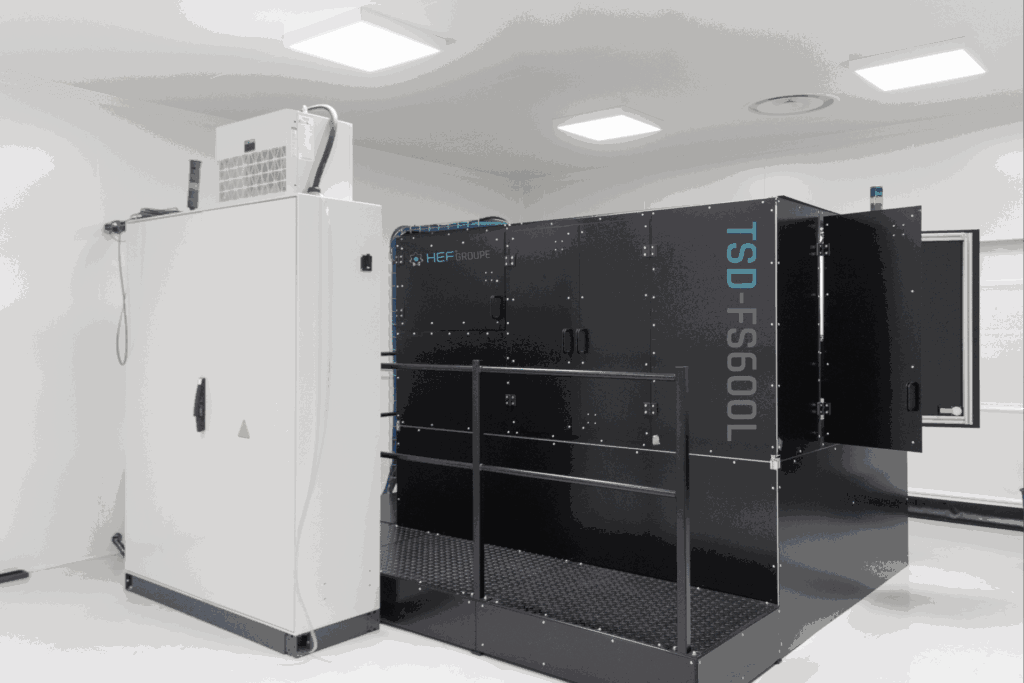
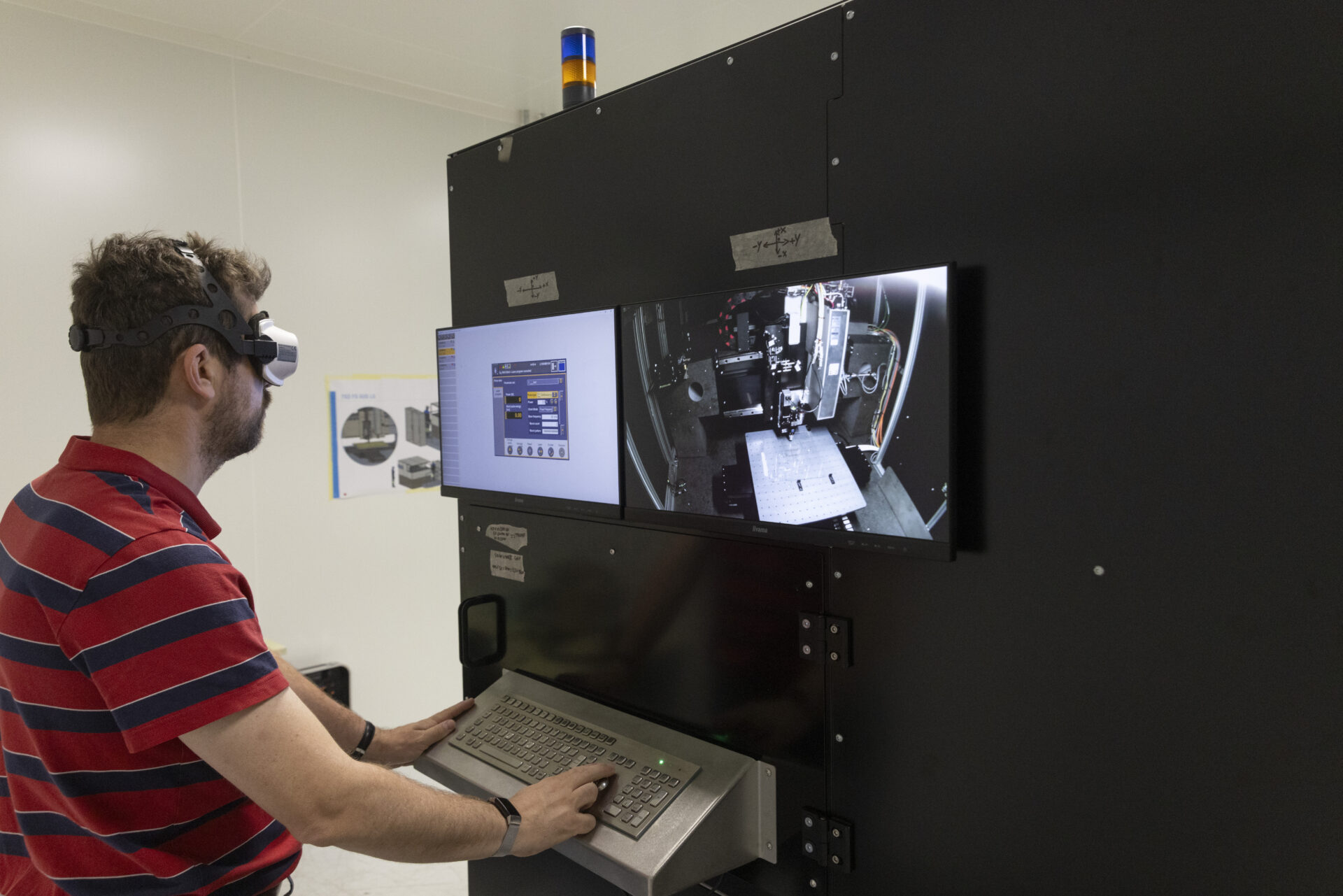
LISTEK draws on its global manufacturing presence in 24 countries and on a new industrial machine for high-volume production, the TSD-FS600 L, which automates laser processing on any substrate, whether planar or 3D.
Combined with the teams at its IREIS research institute and the 13 materials science technology platforms at Manutech USD—Europe’s leading institute for ultrafast lasers—the HEF Group thus controls the entire value chain:
- R&D and simulation: materials design and process engineering.
- Equipment design: development of specialized machines and tools.
- Contract processing and component manufacturing: Industrial production of functionalized components.